
How Startups Can Deliver a Great Candidate Experience - Even Without a Full HR Team
Learn how startups can deliver a great candidate experience without a full HR team using smart processes, clear communication, and lean hiring tools.
Table of Contents

Introduction
In today's talent market, a startup's hiring process isn't just a gateway for new employees-it's a critical first impression of the company's culture, operational efficiency, and long-term viability.
On social media and professional networks like LinkedIn and Blind, tales of negative interview experiences with startups-ghosting, disorganised scheduling, vague feedback-spread quickly, creating significant reputational headwinds.
For a resource-constrained startup competing for top-tier talent against well-funded giants, this perception challenge is acute. Yet, as research by S. K. Singh et al. underscores, candidate experience is not a luxury but a critical factor in startup hiring success.
This article explores how startups can leverage strategic principles and smart technology to build a candidate experience that fosters trust, attracts the right talent, and builds a foundation for long-term employee engagement, all without a dedicated HR department.
We will cover the foundational importance of candidate experience, practical strategies for implementation, the role of technology as a force multiplier, and how to adopt a mindset that turns hiring into a competitive advantage.
Why Candidate Experience Is a Strategic Imperative, Not an Administrative Chore

For a startup, every interaction is a branding opportunity. The hiring process is arguably one of the most consequential.
A study by R. K. Gupta et al. provides a compelling data-driven reason to focus on this area: employees who undergo a respectful, transparent, and efficient hiring process tend to exhibit higher initial engagement and longer tenure.
This correlation is vital for startups, where the cost of a mis-hire or early departure is disproportionately high, impacting not just morale but also precious runway.
The logic is straightforward. A candidate who experiences clarity, respect, and professionalism during interviews infers that the company operates with those same values.
Conversely, a chaotic, uncommunicative process signals internal disorganisation, which can deter the very candidates a startup needs most-those who are methodical, reliable, and value efficiency. This goes beyond mere sentiment; it directly impacts the bottom line.
A negative experience can lead to a candidate withdrawing their application, declining an offer, or dissuading others from applying, thereby increasing the effective cost per hire and slowing down critical growth.
Adopting an Effectuation Mindset for Your Hiring Process
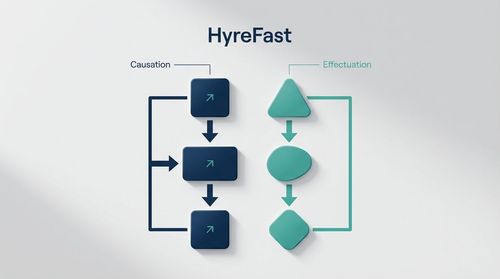
Software startups face unique challenges, including limited resources and intense time-to-market pressures. These constraints often demand unconventional approaches. Interestingly, research into software engineering practices for startups suggests that Effectuation is a relevant model for developing suitable practices.
Instead of traditional causation models (starting with a fixed goal and seeking resources to achieve it), effectuation starts with a given set of means and allows goals to emerge creatively.
This logic applies perfectly to building a candidate experience without a full HR team. Rather than aiming to replicate the complex, resource-heavy processes of a large corporation (a causation approach), startups should ask:
"What means do we have?" Your means are likely your small, passionate team, your agility, and your accessibility to leadership.
The goal, then, is to design a hiring process that leverages these unique strengths. A candidate might be willing to tolerate a slightly slower process if it includes a genuine conversation with a founder-something a large corporation cannot easily offer. Effectuation is about turning constraints into advantages.
A Practical Framework: The Four Pillars of Lean Candidate Experience

Building a great experience can be broken down into four manageable pillars, even for a team wearing multiple hats.
1. Process Transparency from the Outset

Clarity is kindness. The journey begins with the job description. It must be accurate, reflecting the true challenges and opportunities of the role, and should explicitly outline the stages of the hiring process.
A simple line like, "Our process typically involves a screening call, a technical task, and two interview rounds, and we aim to provide feedback within a week of each stage," sets clear expectations.
This transparency manages candidate anxiety and demonstrates organisational competence. The startup's advantage here is honesty-candidates appreciate understanding the realities of an early-stage role, including the challenges.
2. Structured and Consistent Interviews
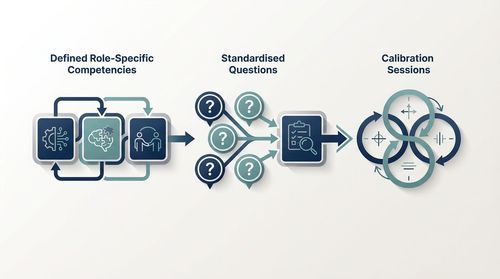
A structured process does not mean an inflexible one. It means ensuring fairness and comparability. This involves:
- Defined Role-Specific Competencies: Before interviewing, the hiring team should agree on the 3-5 core competencies (e.g., "Python proficiency," "problem decomposition," "collaboration") essential for the role.
- Standardised Questions: Each interviewer focuses on a specific competency set and asks similar questions of all candidates. This reduces bias and provides a clearer basis for comparison.
- Calibration Sessions: Brief post-interview discussions among interviewers ensure everyone is aligned on evaluation criteria. This is where a startup's small size is a benefit-getting everyone in a virtual room for 15 minutes is feasible.
This structure is what makes the findings of R. K. Gupta et al. actionable. Respect and efficiency are baked into a fair, well-run process.
3. Rigorous Communication Protocols
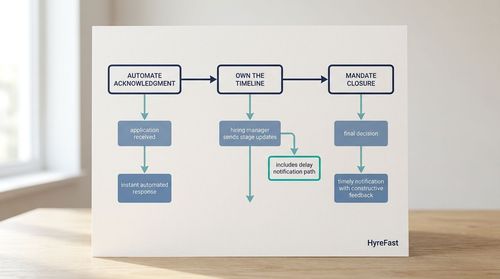
Communication breakdowns are the primary source of candidate frustration. In the absence of an HR manager, this must be systematised.
- Automate Acknowledgment: Use a simple ATS or even calibrated email templates to instantly acknowledge every application.
- Own the Timeline: Assign a "process owner" (e.g., the hiring manager) responsible for sending updates at each stage. If a delay occurs, a brief, honest email ("We need a few more days to review applications, we'll be in touch by Friday") is far better than silence.
- Mandate Closure: Every candidate, including those rejected, deserves a timely and respectful notification.
A template that offers brief, constructive feedback (where possible) leaves a positive impression. This candidate may be a future customer, a referrer, or a re-applicant as the company grows.
4. Empowerment and Enablement of the Hiring Team

The engineers, product managers, and founders conducting interviews are not professional recruiters. They need to be equipped for success.
- Provide Simple Training: A short guide on conducting behavioural interviews, avoiding unconscious bias, and providing constructive feedback is invaluable.
- Create a Toolkit: Equip them with a shared folder containing interview scorecards, question banks, and feedback forms. This reduces cognitive load and ensures consistency.
- Celebrate Good Hiring: Make hiring a shared team victory. Recognise team members who contribute effectively to the process, reinforcing its importance.
Leveraging Technology as Your Lean HR Partner

Startups can leverage technology not to replace human interaction, but to eliminate administrative friction, allowing the team to focus on high-value connections. The key is to choose tools that integrate seamlessly and solve specific pain points.
- Applicant Tracking Systems (ATS): For startups, an ATS is less about complex workflow management and more about a single source of truth.
Platforms like Lever, Greenhouse, or more affordable options like Breezy HR centralise applications, automate initial communications, and schedule interviews, preventing candidates from falling through the cracks.
They also provide analytics to help you optimise your process over time, a key ability highlighted in the research.
- Video Interviewing Platforms: Tools like Zoom, Google Meet, or specialised platforms like HireVue facilitate remote interviews, essential for accessing a global talent pool. The startup advantage? The informality of a video call can often lead to more genuine conversations than a formal, in-office panel.
- Communication and Collaboration Tools: Slack or Microsoft Teams channels dedicated to hiring can streamline internal coordination. Using a scheduling tool like Calendly or SavvyCal for initial screens eliminates the back-and-forth emails that waste time and frustrate candidates.
The trade-off is clear: a small investment in the right technology frees up significant human capital. The cost of these tools is often far lower than the opportunity cost of founders and engineers spending hours on administrative tasks.
Conclusion: Building Your Hiring Brand

For a startup, building a great candidate experience is a strategic investment that pays dividends in talent quality, retention, and employer branding. It requires a deliberate approach that aligns with the company's unique constraints and strengths.
- Candidate Experience is an Early Indicator of Culture: The hiring process is a microcosm of your company. A respectful, efficient process signals a respectful, efficient organisation.
- Transparency and Structure Scale: Implementing clear communication and structured interviews from the beginning creates a foundation that can grow with the company, avoiding painful process redesigns later.
- Technology is a Force Multiplier: The right tools automate administrative burdens, allowing your small team to focus on what matters most-building genuine connections with potential colleagues.
- Effectuation Over Causation: Leverage your agility and accessibility as strengths, rather than seeing the lack of a large HR team as a weakness.
By adopting these practices, startups can transform their hiring process from a source of stress into a competitive advantage, ensuring they attract and secure the talent necessary to thrive.
References
- Singh, S. K., et al. Research on candidate experience in startup hiring. (Source: Core Lit Agent)
- Gupta, R. K., et al. Study on the correlation between hiring process experience and employee engagement/tenure. (Source: Core Lit Agent)
- Research on software startup challenges and the application of Effectuation theory in software engineering practices. (Source: Core Lit Agent)
- "The Importance of Candidate Experience in Recruitment." (Source: Web Agent)
- Industry sentiment and discussions on candidate experience from professional social networks. (Source: Social Media Agent)