
Series A to Series C: How Fast-Growing Startups Structure Their Hiring Process
From Series A to Series C, discover how fast-growing startups structure hiring processes, build scalable teams, and align talent strategy with rapid growth.
Table of Contents

Introduction
You've closed your Series A. The product-market fit is proven, the runway is secured, and the market is hungry. Now comes the most critical, high-stakes challenge of this growth phase:
scaling your team. The hiring process that worked when you were a 10-person team making intuitive, swift decisions will inevitably break under the weight of 50, then 100, then 300 new hires.
The transition from a lean startup to a scaled organisation is a fundamental rewiring of your company's operational DNA, and nowhere is this more evident than in hiring.
This evolution is not merely about increasing volume; it's a strategic shift from generalised agility to specialised efficiency, from intuition-led decisions to data-driven processes.
Getting it wrong can mean burning through capital, demoralising your existing team, and hiring the wrong people for the next chapter of your story.
This article explores the distinct hiring architectures that successful startups build as they journey from Series A through to Series C, detailing the systems, tools, and mindset shifts required at each stage.
Series A: Building the Core Team with Agility and Precision
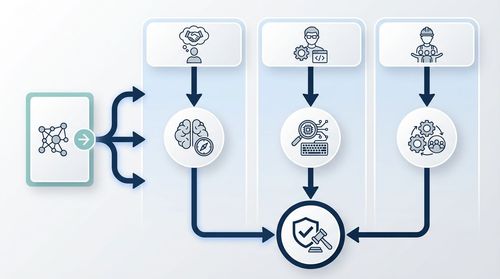
At the Series A stage, the company is typically comprised of 20-50 employees. The primary goal is to deepen product-market fit and begin scaling user acquisition. The hiring focus is intensely strategic—every single hire must be a multiplier.
The "Player-Coach" Recruitment Model: There is no dedicated HR or recruitment team. The founders and the earliest employees are the recruitment function.
This has a distinct advantage: the people who built the product and understand the vision are directly infusing that culture and skill set into the new team. The process is characterised by high touch and deep integration.
A candidate might have coffee with the CEO, a technical deep-dive with the CTO, and a culture-fit conversation with the first engineer, all in the same week.
Low-Friction, High-Conviction Processes: Formal job descriptions are often secondary to a clear articulation of the problem the hire will solve. Sourcing is heavily reliant on the founding team's network-referrals are the lifeblood.
This method prioritises trust and pre-vetted quality over a broad candidate pool. The evaluation criteria are equally lean: Can this person build this specific thing? Do they share our burning passion for the problem we're solving?
The decision-making is fast, often based on collective gut feeling reinforced by a focused skills assessment, such as a targeted coding challenge or a product case study.
The key at this stage is to maintain velocity without sacrificing the cultural cohesion that made the early team successful. The process is designed for precision, not scale.
Series B: Architecting for Scale with Structure and Specialisation
Series B funding is about accelerating growth, often aiming to dominate a market segment. The headcount target can be aggressive, perhaps doubling the team size within 12-18 months.
The informal, network-based hiring of Series A simply cannot support this volume. This is the stage where process becomes a strategic asset, not a bureaucratic burden.
The Emergence of a Talent Function: A critical shift occurs with the hiring of the first dedicated Talent Acquisition professional or a small internal recruitment team.
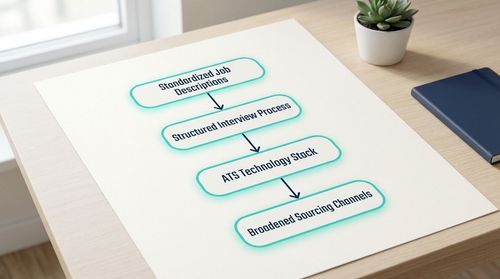
This moves the process from being an ad-hoc task for engineers and product managers to a specialised function. Their first order of business is to introduce foundational structure. This includes:
- Standardised Job Descriptions: Moving from vague problem statements to clear role mandates, responsibilities, and competency frameworks.
- Structured Interview Processes: Implementing consistent interview loops where each interviewer has a designated focus (e.g., technical competency, system design, values alignment) using a standardised scoring rubric. This reduces individual bias and allows for comparative candidate evaluation.
- Technology Stack Implementation: An Applicant Tracking System (ATS) like Lever or Greenhouse becomes essential. It provides a single source of truth for candidate pipelines, automates scheduling, and generates crucial data on sourcing channel efficiency and time-to-fill. Broadening the Sourcing Aperture: With a dedicated function, the company can proactively build talent pipelines.
This involves moving beyond referrals to include targeted outreach on platforms like LinkedIn, partnerships with coding bootcamps, and a more strategic presence at industry conferences.
The goal is to build a diverse and robust candidate funnel, ensuring the company isn't limited by the homogeneity of its existing network.
At Series B, the hiring machine is built. The focus is on creating a repeatable, measurable, and efficient process that can reliably bring in high-quality talent week after week.
Series C: Optimising the Talent Engine with Data and Specialisation
By Series C, the startup is a growth-stage company, often with several hundred employees and sights set on market leadership or preparing for an IPO.
The hiring process is no longer just a support function; it is a core strategic operation that must be optimised for efficiency, predictability, and strategic alignment.
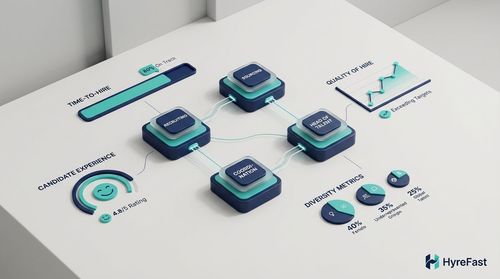
The Fully-Fledged Talent Organisation: The recruitment team expands into a multi-faceted talent function with specialised roles: Sourcers, Recruiters, Recruiting Coordinators, and even a Head of Talent.
This specialisation allows for deep expertise in different areas (e.g., engineering vs. sales recruitment) and frees up senior recruiters to focus on strategic roles and building relationships.
Data-Driven Decision Making: The ATS is now a goldmine of data that drives strategy. Key metrics become central to weekly reviews:
- Time-to-Hire: How long does it take from first contact to offer acceptance? Optimising this reduces the risk of losing top candidates to competitors.
- Quality of Hire: Measured through performance review scores, retention rates, and hiring manager satisfaction surveys.
- Candidate Experience Scores: Feedback from candidates about their interview process is systematically collected and acted upon, crucial for employer branding.
- Diversity Metrics: Data on the diversity of the candidate pipeline and hires is tracked meticulously to hold the company accountable to its DEI (Diversity, Equity, and Inclusion) goals. Leveraging Advanced Tools and Strategic Partnerships: The technology stack matures further. AI-powered tools might be used for initial resume screening or to reduce unconscious bias in language used in job descriptions.
For highly competitive roles or large-volume hiring (e.g., building a new sales team), companies may engage strategic partnerships with executive search firms or RPOs (Recruitment Process Outsourcers) to complement their internal efforts.
The Series C hiring process is a well-oiled machine. It balances the need for rigorous, standardised evaluation with a focus on creating an exceptional candidate experience that reinforces the company's brand as an employer of choice.
Conclusion: The Journey from Art to Science
The metamorphosis of a startup's hiring process from Series A to Series C is a journey from an art to a science. It's a necessary evolution that mirrors the company's own growth.
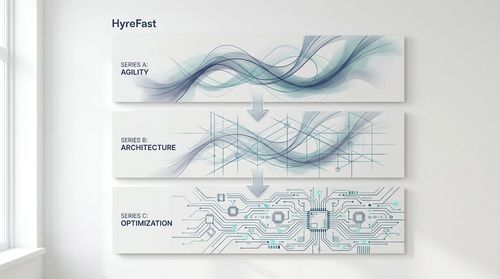
- Series A is about Agility: Leveraging the founder's vision and network to build a core team with precision and speed. The process is an extension of the company's culture.
- Series B is about Architecture: Building the foundational systems-people, process, and technology-that enable rapid, reliable scaling without breaking.
- Series C is about Optimisation: Using data and specialisation to refine the talent engine, ensuring it not only fills roles but also drives strategic advantages in a competitive market.
For founders and hiring managers, the key is to recognise which stage you are in and proactively invest in the next level of hiring infrastructure before the current one breaks. A hiring process that scales effectively is not an administrative afterthought; it is the very mechanism through which a visionary idea becomes an enduring company.
References
- "The Evolution of Hiring Processes in Startups" (2023) - Journal of Entrepreneurial Finance
- "Scaling Your Startup: A Guide to Effective Hiring" (2022) - Entrepreneur Magazine
- "The Impact of Series Funding on HR Functions in Startups" (2021) - HR Gazette