
Why Your Clients Are Frustrated With Your Shortlists (And What to Do About It)
Why recruitment shortlists get rejected and how agencies can improve quality, alignment, and conversions with a structured hiring framework.
Table of Contents

Introduction
You know the call. The one that makes your stomach drop. Your client’s voice is polite, but the undercurrent of frustration is unmistakable. “We’ve gone through three shortlists from you already,” they say, “and we’re still back at square one.”
You’ve worked hard, sourced aggressively, and submitted what you believed were strong candidates. Yet, the feedback is vague, the shortlist is rejected, and the relationship is fraying.
If this sounds familiar, you’re not alone. Across India’s recruitment landscape, a frustrating dance is playing out: agencies deliver shortlists, clients reject them, and both sides are left wondering what went wrong.
The tension isn’t always about the candidates themselves-it’s about a broken process, misaligned communication, and mismatched expectations.
This article dissects the root causes of this widespread frustration and provides a practical, battle-tested framework to fix it.
Whether you’re a boutique search firm or a large staffing agency, these insights will help you deliver shortlists that convert-and build client relationships that last.
The Frustration Paradox: Why Good Effort Leads to Bad Results
Here’s the uncomfortable truth: most recruitment agencies are trying hard. Recruiters work long hours, source actively, and genuinely strive to find the right fit. Yet, client dissatisfaction remains high. The disconnect lies not in effort, but in alignment.
Agencies and clients often operate with different definitions of “quality,” different expectations around process, and different communication rhythms. When these misalignments pile up, even technically competent submissions feel like misses.
The client sees a shortlist of five and thinks, “None of these are what I asked for.” The agency feels blindsided because they “followed the brief.” Trust erodes, and the partnership becomes adversarial.
The Top Reasons Your Shortlists Are Being Rejected
To solve the problem, we must first diagnose it. Here are the most common reasons clients reject shortlists-and why they silently lose faith in their recruitment partners.
1. The "Keyword Match" Syndrome: Prioritising Quantity Over Quality
Many agencies still operate on a volume-based model: submit as many candidates as possible, hoping something sticks. The shortlist becomes a fishing net, not a curated selection.
Clients receive 10-15 profiles to find 80% are obvious mismatches-lacking critical skills, wrong seniority, or completely off-market.
Why it happens: Pressure to “show activity.” Agencies worry that submitting fewer candidates makes them look inactive, so they pad the list with marginal fits.
The client perspective: A bloated shortlist is insulting. It signals the agency didn’t understand the role or respect the client’s time. Clients want three strong candidates, not fifteen weak ones.
2. A Superficial Understanding of "Cultural Fit"
Clients often say candidates look perfect on paper but “don’t feel right” in practice. This usually means the agency prioritised technical keywords while ignoring the role’s softer dimensions-leadership style, team dynamics, company values, and growth trajectory.
Why it happens: Cultural fit is harder to assess and quantify. It’s easier to match resumes than to understand how a candidate thinks, collaborates, and solves problems. Many agencies skip the deep-dive conversations that reveal these nuances.
The client perspective: Technical skills can be developed; cultural misalignment is fatal. A brilliant engineer who doesn’t collaborate or a sales star who clashes with the company’s ethos will fail quickly and expensively.
3. The Resume-Review-Only Screening Method
Some agencies still rely on superficial screening: scanning resumes for keywords and forwarding anything that looks promising, without ever speaking to the candidate. This fails to verify genuine interest, motivation, or communication skills.
Why it happens: Speaking to every candidate is time-consuming. High-volume agencies argue they can’t afford deep screening for every applicant, but this shortcut creates a massive “quality tax” later.
The client perspective: Nothing erodes trust faster than interviewing a candidate who didn’t know they were submitted, has no real interest, or communicates poorly. It wastes everyone’s time.
4. Lack of Market Context and Realistic Expectations
Agencies often submit candidates without crucial context: salary expectations 30% above budget, overqualified candidates who will leave soon, or professionals who are a poor geographical fit. The shortlist feels out of touch with reality.
Why it happens: Agencies sometimes avoid difficult conversations. They fear pushing back on unrealistic requirements or educating the client about market realities, hoping to “find someone” against the odds.
The client perspective: Clients hire an agency to be the market expert. When submissions ignore market realities, the client questions the agency’s competence and credibility.
5. The "Submit and Forget" Approach
Some agencies treat the shortlist as the finish line. Once submitted, they wait passively for feedback rather than proactively preparing candidates, managing expectations, or supporting the interview process.
Why it happens: Agencies often view their role as sourcing and submission, assuming the client’s process will handle the rest. This passive approach leaves candidates unprepared.
The client perspective: When candidates show up uninformed, disengaged, or with mismatched expectations, it reflects poorly on the agency and damages the client’s trust in the partnership.
A Framework for Shortlist Transformation
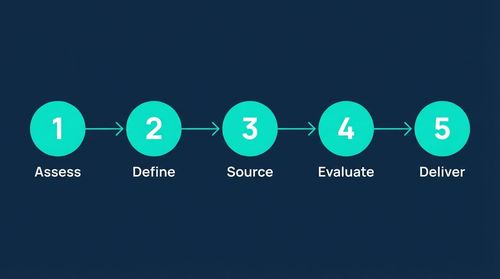
The solution isn’t to work harder but to change the model. Here is a practical, five-phase framework to deliver shortlists that clients are eager to interview.
Phase 1: Deep Discovery – Before You Source a Single Candidate
The most critical work happens before any sourcing. Move beyond the job description to understand the context of the role.
- Conduct Extended Discovery Calls: Ask why the role is open. What does success look like in the first 90 days? Who will the candidate report to, and what is the team dynamic?
- Perform Technical Deep Dives: For technical roles, ensure your recruiters understand the stack, architecture, and challenges well enough to ask intelligent questions.
- Document an "Ideal Candidate Profile": Create a structured profile including technical skills, soft skills, cultural attributes, and career trajectory. Share it with the client for validation before you begin. Why this works: When you truly understand the role, sourcing becomes targeted, not random. You’re matching context, not just keywords.
Phase 2: Intelligent, Multi-Channel Sourcing
Relying solely on job boards produces a “sea of sameness.” Differentiate your shortlist through proactive, multi-pronged sourcing.
- Build a Proprietary Pipeline: Invest in relationships with passive talent. Engage them with market insights and check-ins, not just job pitches when you have a role.
- Go Deep, Not Wide: For critical roles, research the market, map competitor org charts, and approach individuals with precision. A shortlist of five deeply researched candidates outperforms ten generic ones.
- Leverage Technology for Rediscovery: Before sourcing anew, use AI-powered tools to rediscover strong candidates from your own database who applied for similar roles in the past. Why this works: Proactive sourcing and rediscovery dramatically reduce time-to-shortlist while ensuring a differentiated, high-quality pipeline.
Phase 3: Rigorous, Structured Qualification
A resume tells you what someone has done; your qualification must reveal if they’ll succeed in this specific role.
- Mandatory Candidate Conversation: Never submit a candidate you haven’t spoken to. A 15-minute structured screen reveals motivation, communication skills, and cultural alignment.
- Implement Behavioural Interviewing: Use structured questions (e.g., “Tell me about a time when…”) to assess problem-solving, collaboration, and fit.
- Validate Early: Confirm salary expectations, notice period, and location flexibility upfront. There’s no point submitting a candidate who won’t relocate or expects double the budget. Why this works: Rigorous qualification filters out poor fits early, ensuring every candidate on your shortlist is interview-ready and genuinely interested.
Phase 4: Strategic, Context-Rich Submission
How you present the shortlist matters as much as who is on it. A context-rich submission demonstrates expertise and saves the client time.
- Limit and Curate: Commit to a maximum of 3-5 candidates. This forces discipline and signals confidence.
- Provide a Narrative, Not Just a Resume: For each candidate, write a brief note explaining: (a) how they match the specific requirements, (b) their key differentiators, and (c) any areas to probe (e.g., a career transition).
- Include Market Intelligence: Attach a brief on salary benchmarks, talent availability, and competitor hiring trends. This positions you as a strategic advisor. Why this works: A focused, well-explained shortlist builds trust, demonstrates professionalism, and guides the client’s decision-making.
Phase 5: Relentless Follow-Up and Feedback Integration
Your job isn’t done at submission. This phase closes the loop and turns every interaction into a learning opportunity.
- Systematise Feedback Requests: Within 48 hours of submission, proactively ask for detailed feedback on each candidate.
- Conduct Root-Cause Analysis: When a shortlist is rejected, analyse why. Was it sourcing, screening, or a miscommunication? Don’t let history repeat itself.
- Share Post-Process Insights: After the search, provide the client with a summary of learnings about the talent market for their future hiring. Why this works: A closed feedback loop ensures continuous improvement. Clients see you are responsive and committed to refining your service based on their input.
Measuring What Matters: Key Metrics for Shortlist Success
How do you know your changes are working? Track these metrics:
| Metric | What It Tells You | Healthy Target |
|---|---|---|
| Shortlist-to-Interview Rate | How often clients interview your candidates | >70% |
| Interview-to-Offer Rate | How often interviewed candidates receive offers | >50% |
| Offer-Acceptance Rate | How often candidates accept offers | >80% |
| Time-to-Placement | Total time from mandate to offer acceptance | A decreasing trend |
| Client Satisfaction Score (CSAT) | Direct feedback on the shortlist experience | >4.5 / 5 |
| If these metrics trend downward, your shortlist process needs immediate attention. |
Conclusion: From Transactional Vendor to Strategic Partner
Client frustration with shortlists is a symptom of a deeper issue: a transactional, volume-focused relationship. The fix requires a fundamental mindset shift-from “submitting candidates” to “solving hiring problems.”
When you deliver curated, pre-screened, context-rich shortlists with relentless follow-up, the dynamic changes. Clients stop seeing you as a vendor and start seeing you as a trusted advisor. Shortlists stop being rejected and start converting.
The path to strategic partnership is harder work. It demands deeper discovery, rigorous processes, and honest counsel. But it’s the only path that leads to sustainable, profitable, and fulfilling client relationships. The choice, and the opportunity, begins with your next shortlist.
References
- LinkedIn Talent Solutions. "Global Recruiting Trends Report." 2024.
- Society for Human Resource Management (SHRM). "Recruitment Metrics and Analytics." 2023.
- Google re:Work. "Hiring Manager Feedback Best Practices." 2024.
- Moka HR. "Recruitment Agency Benchmarks." 2024.